I’ve been capturing Lincoln Pride on an actual camera for four years at the time of writing this blog post and I’ve learnt a lot along the way that I thought might be useful to share; and if no one reads it, at least I can look back and remember myself.
Pre(r)amble
I first used a DSLR in Sixth Form as part of my Media and Interactive Media courses around 2010 and even though I enjoyed it I never really picked it up again until Lincoln Pride 2023.
Lincoln Pride 2023
In 2023 the wonderful and very talented Sonia Graham asked if I wanted to be one of her backup shooters for Lincoln Pride 2023 and nervous but excited I agreed.
Sonia gave me a quick rundown and reintroduction to photography and I then spent the days prior to Pride revising and relearning from my Media days.
I needed to capture a little bit of everything on the day and cover any gaps Sonia or the other backup shooters needed covering.
As I had very low expectations of my skill I did what I imagine most people would do in the same scenario, I overshot.
For the stalls, parade, crowds and main stage I took around 1500 photographs, which as Sonia was collating and editing all shooters photographs was a lot.
So that was Lesson 1, don’t overshoot. It’s easy to get caught up in the moment especially if you’re nervous about missing a shot and take more shots than you need to but if you take a few seconds before taking the shot and plan the ‘why’ you want to capture that shot, you’ll save yourself (or poor Sonia) when you come to the post-processing part of the shoot.
Lesson 2, Auto Iso isn’t your friend. As I was continually jumping between scenarios and also exploring the setups (Shutter Priority, Aperture Priority, Manual, Iso Combinations) I quite early on settled on Auto Iso which was fine for crowd and stall shots, but as the stage wasn’t always well lit a lot of those shots ended up with a lot of noise that thankfully Sonia was able to save in the edit.
Takeaways
So at the end of Lincoln Pride 2023, I had three takeaways:
- Overshooting is a pain in the edit
- Auto Iso (without an upper limit) is risky
- A reignited itch for photography
Thank you again to Sonia who gave great advice, was very patient with me and provided her backup Sony A4000 and SEL24240.
Which ultimately led me to picking up my own Sony A4000.
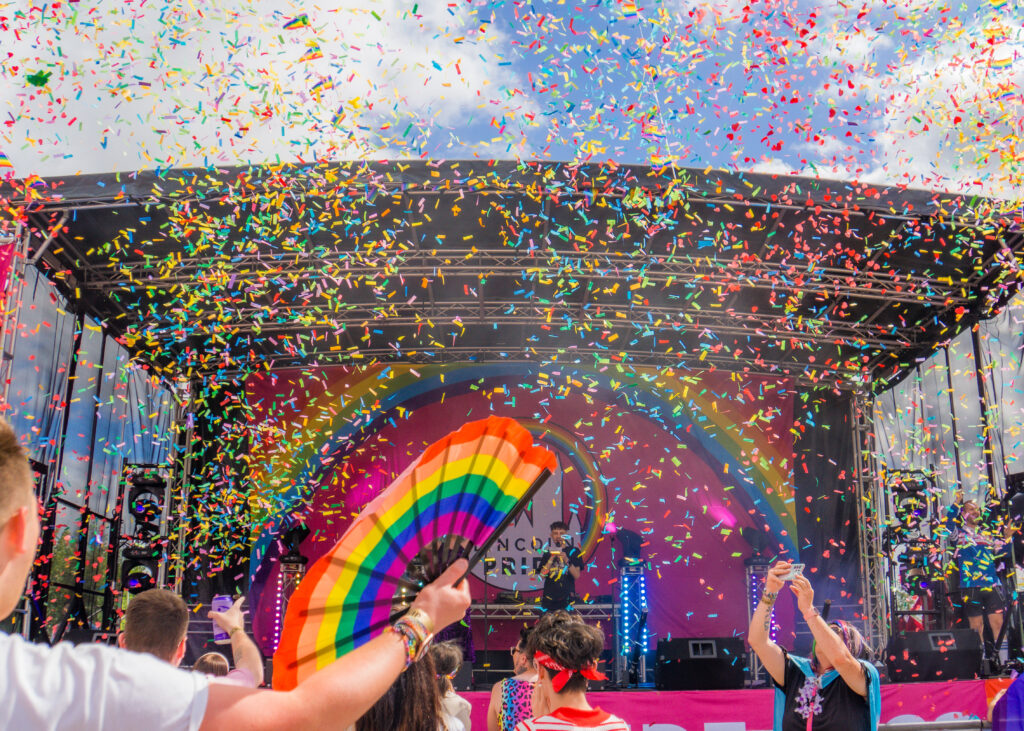
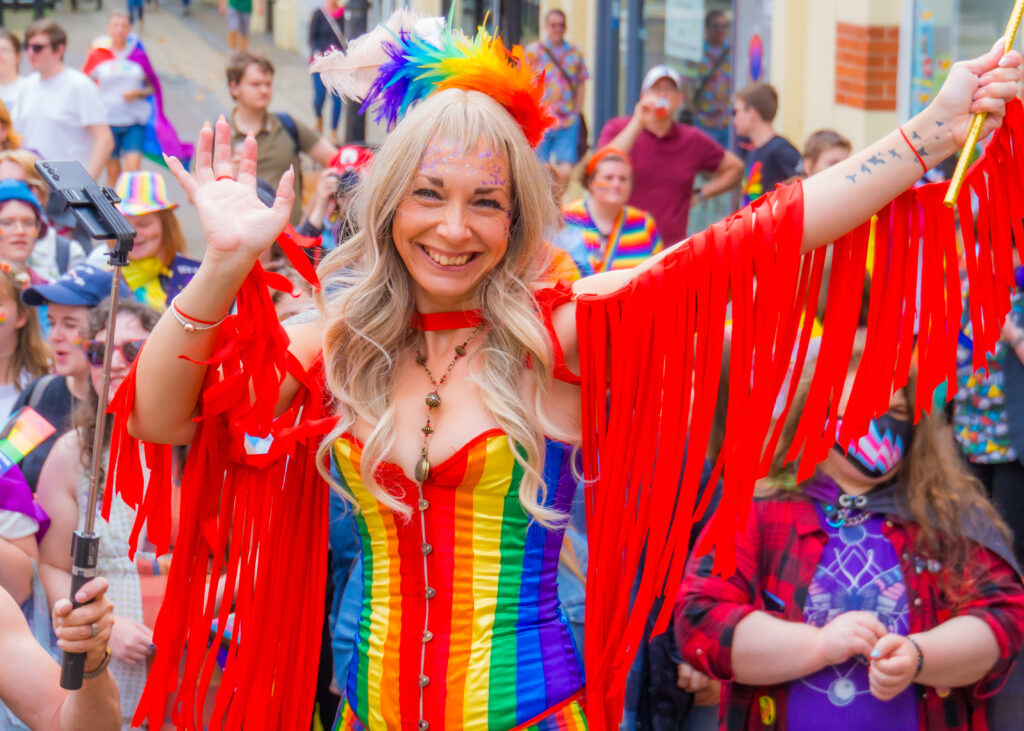
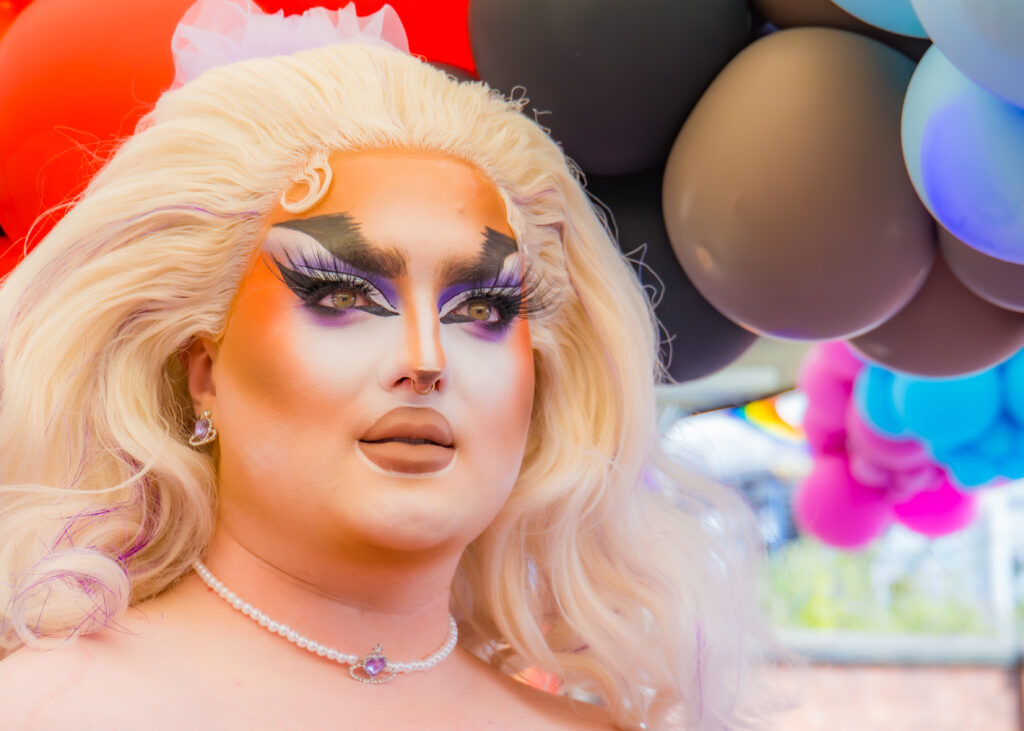
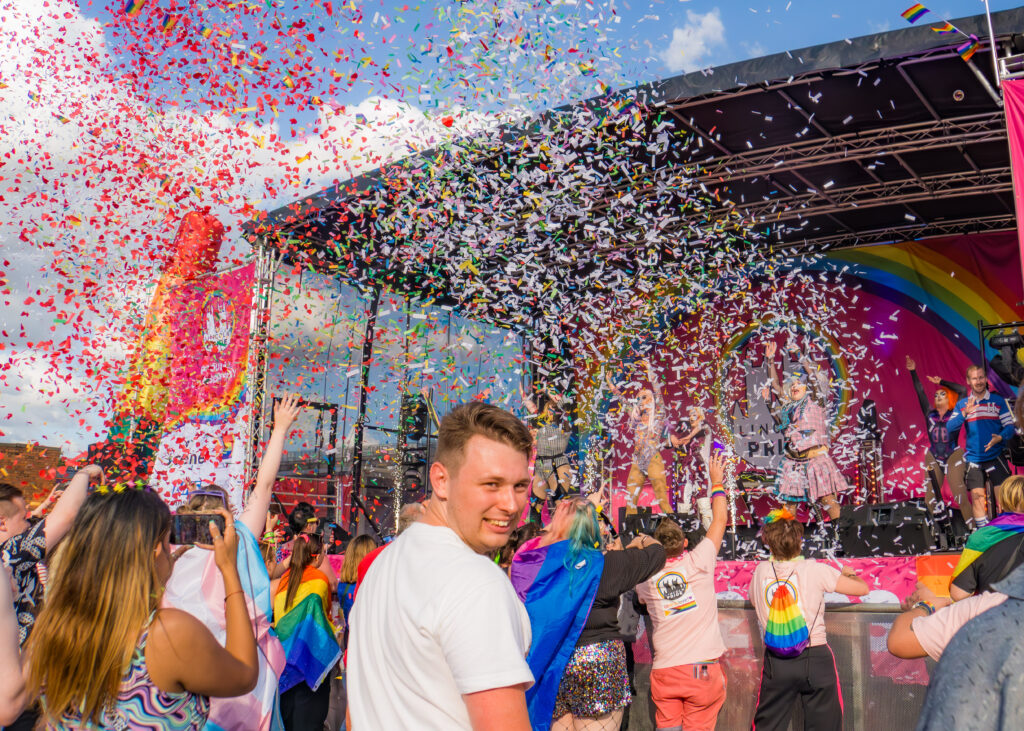
(this is actually the only way to view this gallery)
Lincoln Pride 2024
Lincoln Pride 2024 was my first year attending any Pride with my own camera and lenses with an intent to edit and publish the final photographs.
I was again working with another photographer, Dom Clayton as one of their backup shooters. The idea being to photograph what I wanted to, I would then provide the photographs to Dom who would collate and edit them for publishing on behalf of Lincoln Pride.
While Dom was editing the photos for Lincoln Pride, I still wanted to edit them for my own website and social media.
In addition to capturing photos for Dom, part of my role as a volunteer for Lincoln Pride was to capture the ‘general’ shots like crowds, infrastructure, sponsors, stalls and any requests on the day from the committee, speakers or performers.
Following Lincoln Pride 2023 I went into Lincoln Pride 2024 with my main lesson being ISO and wanted to make sure I didn’t make the same mistake this year; I was also conscious of overshooting throughout.
This led to my first and only lesson I can remember from 2024 (why I’m writing this post); shutter speed.
I kept the ISO at 100 throughout the whole event and shot mostly in Aperture Priority and Manual; which meant shutter speed was my main control for light which was fine for stalls and some crowd shots, but added a lot of motion blur during my stage shots which may be a style some people like for their motion shots, but personally I love capturing the action without a blur.
Compared to the previous years ~1500 photographs, this year I took 803 which was much more manageable; which ultimately ended in 223 final photographs spanning Crowds, Floats, General, Parade, Performances, Portraits and Stalls.
Having a bit more confidence but also only really shooting what I wanted outside of the specific requests of Lincoln Pride members was the main contributing factor.
My process was to fulfil the requirements (Stalls, Infrastructure, Crowds) and get a few shots of each sponsor, speaker or performer on stage inbetween those.
I used three lenses throughout:
- E 50mm F1.8 OSS (SEL50F18)
- E 55-210mm F4.5-6.3 OSS (SEL55210)
- E PZ 16-50mm F3.5-5.6 OSS (SELP1650)
I kept 14 shots on the 50mm, 65 on the 55-210mm and 144 16-50mm.
I initially used the 50 on stalls but due to the setup of them I didn’t have enough space to ‘zoom out’ with my feet so swapped to the 16-50. I then swapped back when I took a few portraits at the end of the day.
For the majority of the day I was running the 16-50 for stalls, crowds and general shots.
I’d then swap to the 55-210 for shots of the stage.
Editing
Editing wise I mostly struggled to find my balance of what style I wanted and bounced around a few styles before ultimately settling on a bump in Whites, Blacks and Vibrance as a default, then I’d go in and tweak the other values if required with as small amount of cropping when absolutely necessary finished with a denoise pass if I had brightened the image too much.
Takeaways
So at the end of Lincoln Pride 2024 I had two takeaways:
- Setting your ISO at 100 and ignoring shutter speed is a really bad idea if you want consistent results and aren’t a fan of motion blur (who knew)
- A custom preset for future pride photos in Lightroom
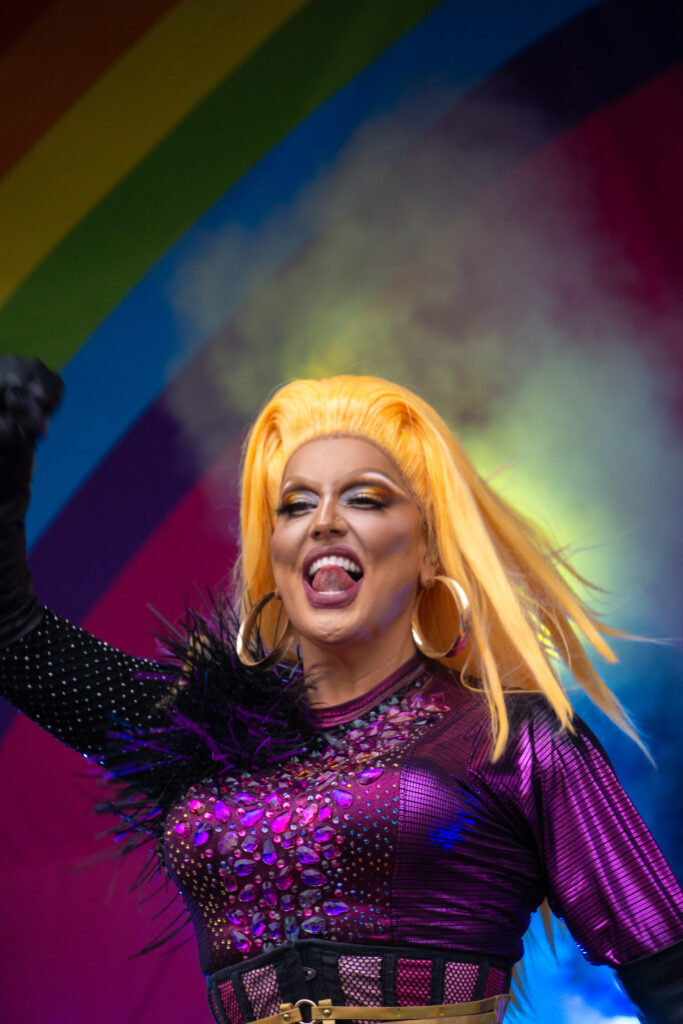
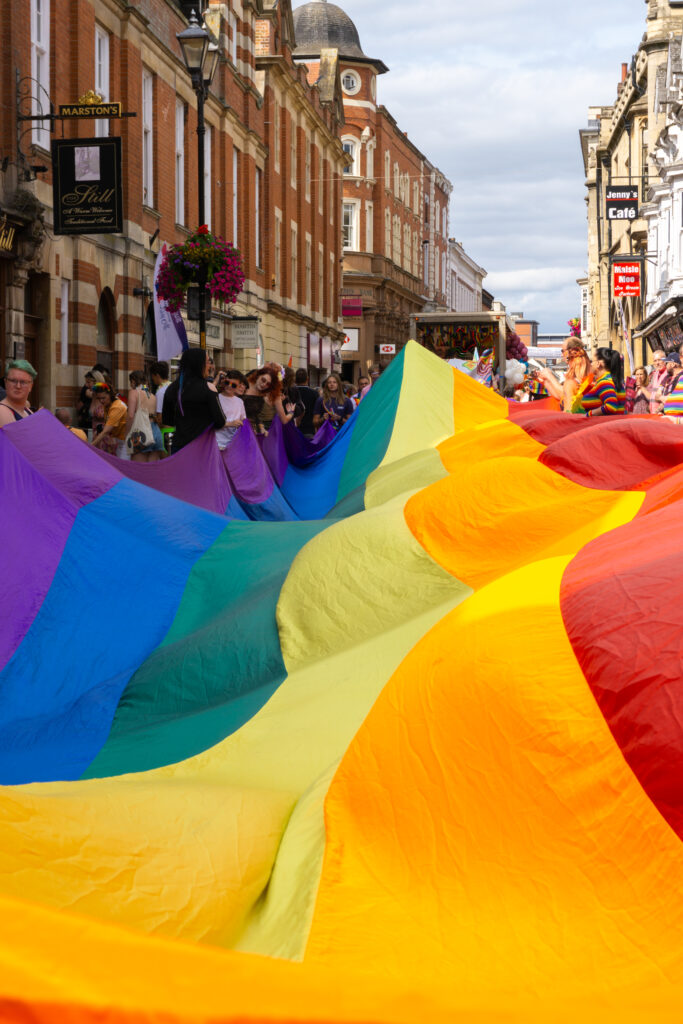
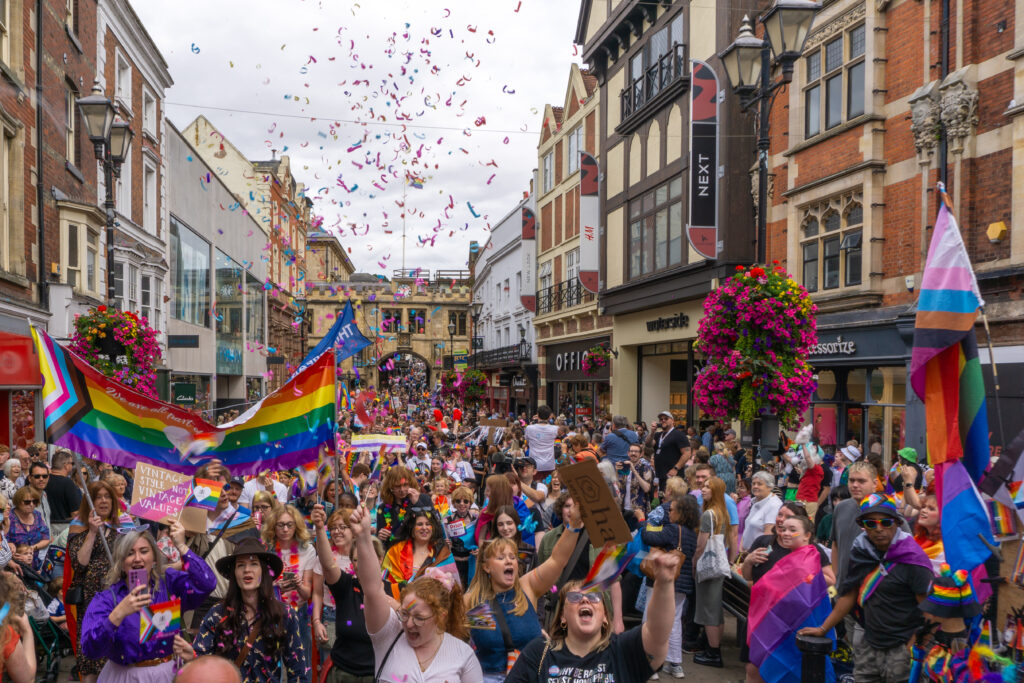
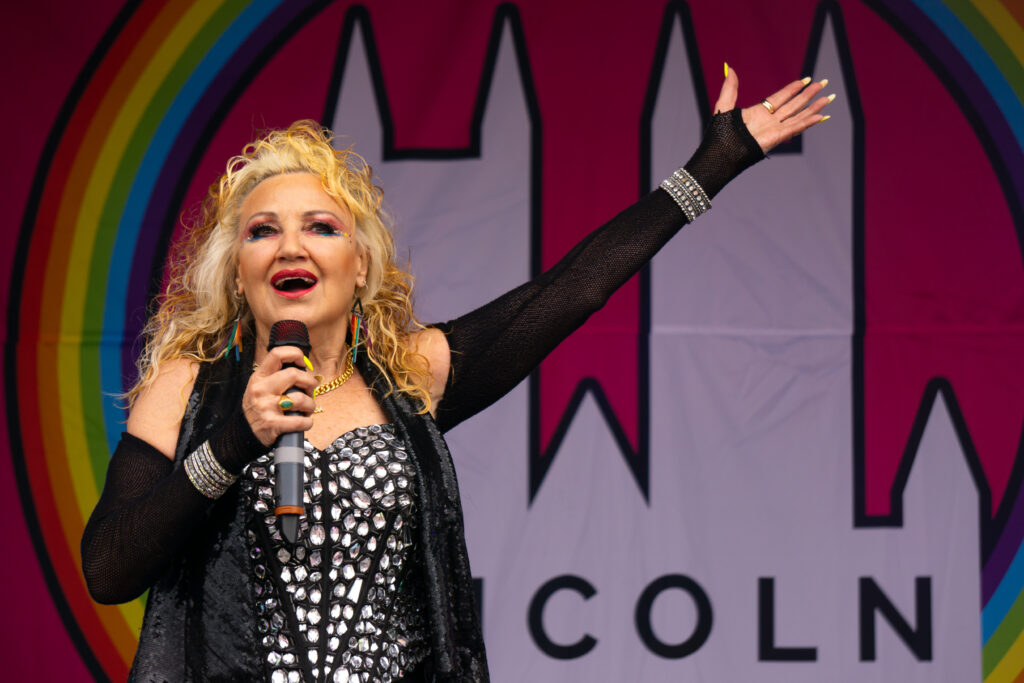
Lincoln Pride 2025
Another year and another Lincoln Pride! However this year was a little different! We moved to a new site and unfortunately the parade wasn’t able to happen due to funding.
This year I was working with Dom again with the same arrangement as before; however this time the plan was for me to send the RAW files over after I had edited them to help with the process.
While I brought all my lenses with me, I also had a new lens this year, a E PZ 18-105mm F4 G OSS (SELP18105G) with the hope of reducing the lens changes by having the 18-105 cover most of my use cases over the day.
Ultimately it covered everything I needed pretty well, I only used my 50mm for a few portraits which probably ‘could’ have been taken with my 18-105, but we all love a prime so why not!
In terms of stats, I took 950 photographs and ended up keeping 349 across Acts, Crowds, Crowdwork, Infrastructure, Portraits, Stalls and VIP Coverage.
11 of which were taken on the 50mm and 338 of which were taken on the 18-105.
From the previous year I was conscious of the shutter speed and shot everything at 100 ISO and F4 thanks to my new lens which helped a lot. Shutter speed was still an issue in some shots from trying to balance the light but was much improved from the previous year, there were some darker photos towards the end of the day but I was able to salvage them and kept the quality.
Editing
Editing wise, I took a very similar approach to the previous year however I refined my process to:
- Apply the preset
- Auto adjust
- Correct for any over auto adjustments
- Reduce the shadows to isolate the subject from the background (for stage shots)
- Denoise where appropriate
And ultimately it was a successful approach and felt quite smooth to work through.
The rest of the day followed the previous year in terms of fulfil the requirements and capture the stage when I could; the only exception was this year, Soraya Vivian did some amazing crowdwork towards the end of the day, getting the crowd and previous performers involved; and to top it off we were in the golden hour so that’s where a few of my extra photographs this year came from.
Takeaways
So my takeaways from this year where:
- I still need to work on shutter speed to be consistent
- I can probably do the whole event with just a 18-105mm F4 G OSS (SELP18105G)


Lincoln Pride 2026
So.. Lincoln Pride 2026. The reason for this retrospective.
We were at the same location as the previous year (which I really enjoyed in 2025) and thanks to all the sponsors and donors, the parade was back!
I was working closer with Dom again this year as a backup shooter but I was also to fill in where he or any of his other backup shooters weren’t available while also photographing what was requested by Lincoln Pride such as Crowds, Infrastructure, Sponsors etc.
Wanting to master shutter speed this year, I shot in Manual for the whole event, starting at ISO 100 and controlling light through both ISO and shutter speed. I started at F 5.6 but ultimately shot at F4 for the majority of the event.
So, the actual event..
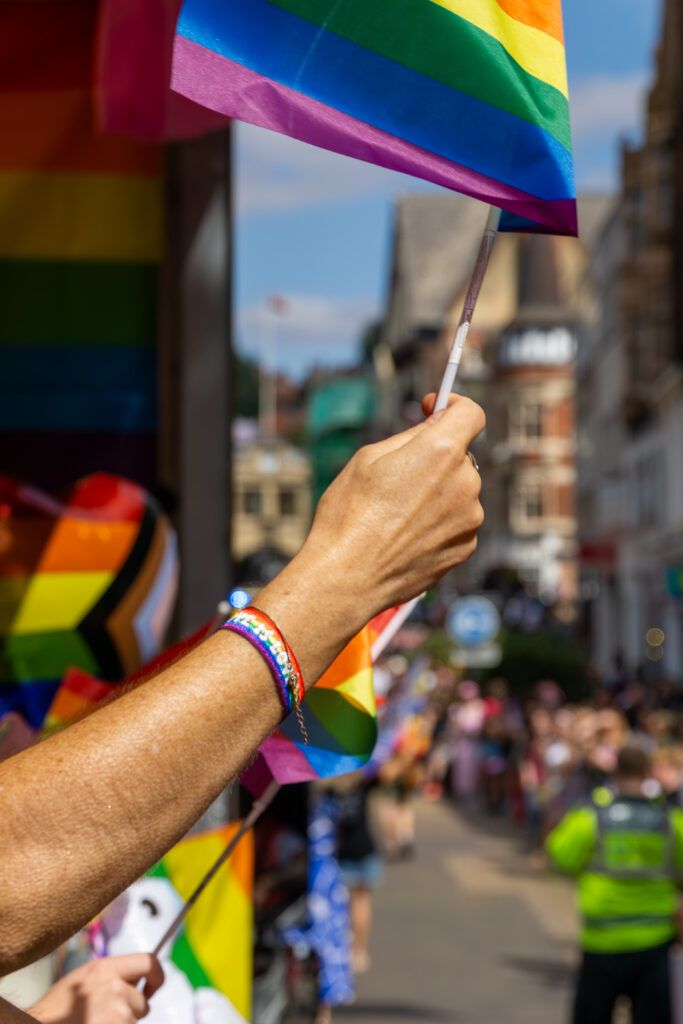
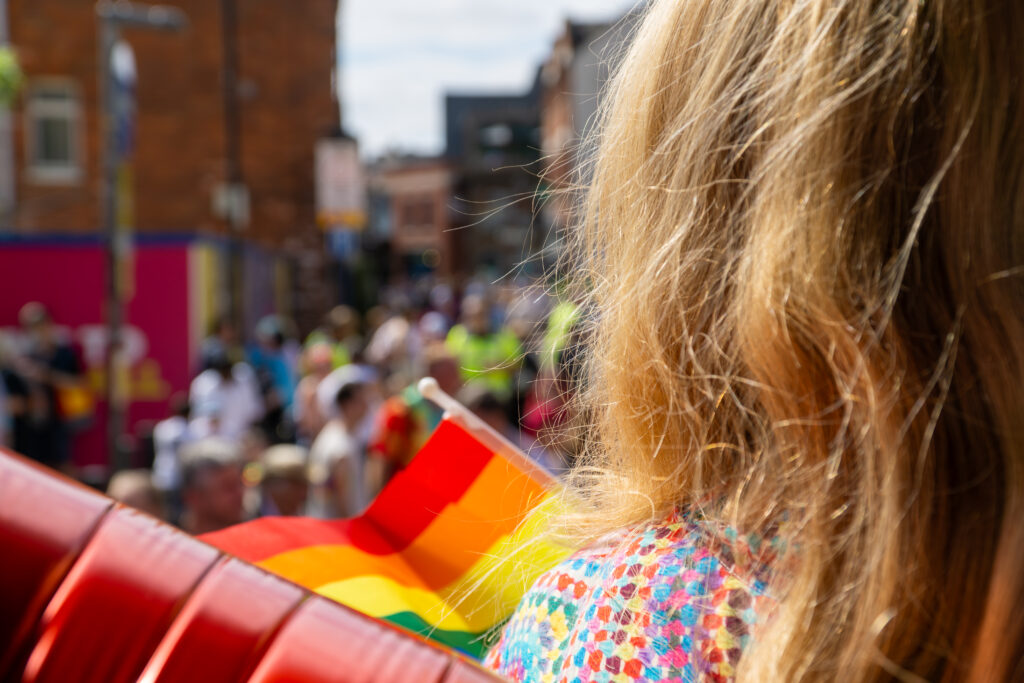
The weather was great for the event, but difficult to photograph. It was full unobstructed sun for most of the day so I was balancing the highlights and shadows constantly which wasn’t too bad at location because there were plenty of chances to capture something again or another version; but for the parade at the start of the day that wasn’t the case so I made sure to take as many photographs as I could at that point.
Unfortunately, that mindset didn’t really leave me for the rest of the day. The weather, combined with a broad coverage requirement and needing to ensure any gaps were covered meant I overshot. A lot.
I took 2397; keeping 401 in total.
But the main problem? I didn’t really have a strategy this year, and I think that was the same problem as 2023. I had planned to cover Crowds, Infrastructure, Stalls and any gaps Dom needed filling, but didn’t have a list of shots I wanted, or how I’d distribute my time, I had planned to shoot the day as it came and I think that contributed massively to the overshooting.
So my main lesson this year, the main reason for this post and the wider Capturing Pride series I want to write about is: Have both a plan and a strategy, otherwise you might end up overshooting and that can make the post processing stage more painful than it needs to be, but more on that later.
So.. Shutter speed.. Each year I seem to be finding the balance between light and motion blur easier to maintain and I think this years strategy worked fairly well.
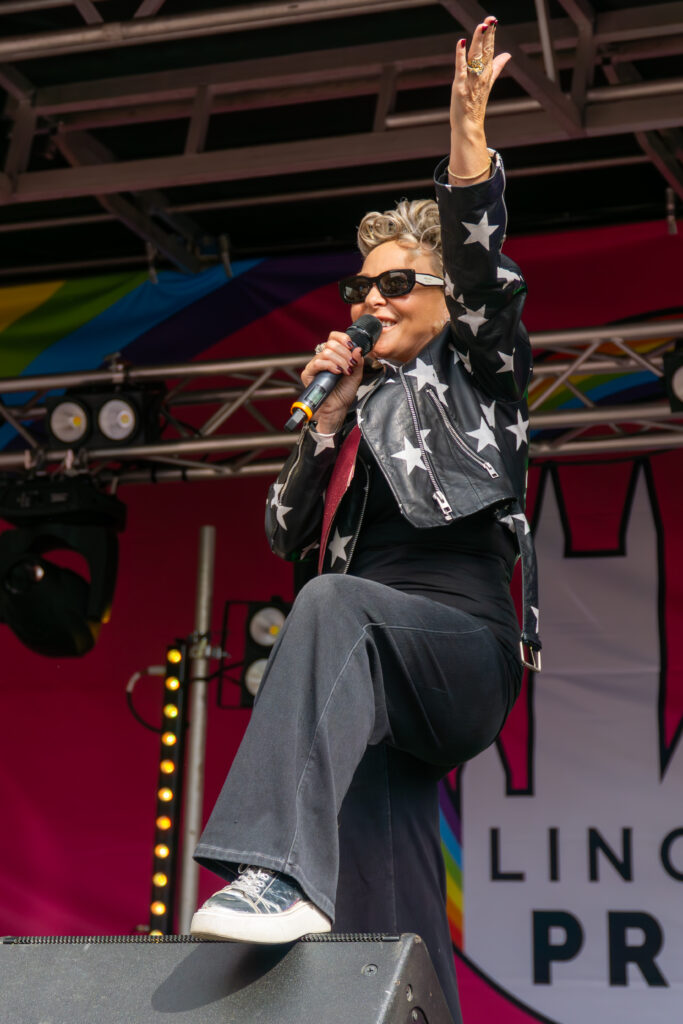
The only problem I had was the stage again as the sun wasn’t facing into the covered area at the start of the day. So for the start of the event I shot at a fixed ISO 400 for the stage which led to some noise, but with some noise reduction passes in Lightroom during post processing that was mostly a non issue.
Next year I might try a smaller bump in ISO and rely more on brightening the image in Lightroom as I prefer to shoot a little darker anyway.
I shot the event with just my 18-105mm F4 G OSS (SELP18105G) which I think was successful. I had less downtime changing lenses and with an Aperture of 4 available all the way through 18-105mm it was very versatile.
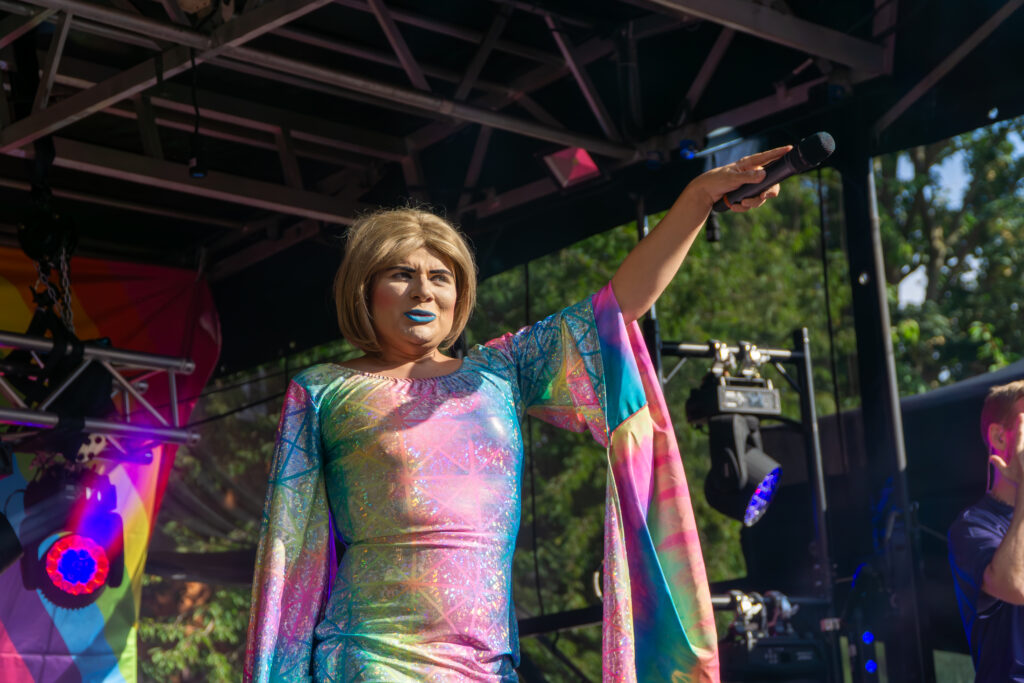
That said, looking back through my previous prides I do miss the creamy bokeh shots I could get with my E 55-210mm F4.5-6.3 OSS (SEL55210) of the stage so I think next year I’ll look at cycling lenses during the event again.
Editing
Editing wise I made some impactful changes that I’ll be using going forwards.
I’ve always found culling slow in Lightroom, the smart preview always distorts the image too much for my liking and can be slow; and to the view the image without the preview in Develop mode is even slower.
So this year I started using XnView MP on Windows which was much faster. I’d go through all my photographs to find any blurry, out of focus or unusable images and flag them as a rating of 1 and move them to a ‘Bad’ folder.
I’d then work through the images again, this time rating any I didn’t like the composition of, or had any other problems with as a 1 and then moving to a rejected folder.
I’d then work through them again and set a rating of 2 for any more I didn’t like, or if I only had 1 or 2 of the same subject, I’d quickly try and pick my preferred image and mark the rejected one with a rating of 2.
I’m sure you can guess the next step.. Any I didn’t like, rated 3 and I’d try and pick between larger sets of the same subject.
For the final pass through in XnView MP I’d likely only have large sets or photographs I’d like to do some light editing on to see if it would meet the standard I wanted. This meant most of the remaining images would proceed to the next stage, but I had one last pass, rating 4 and rejecting for any that stood out for any negative reasons.
Throughout, if at any point I was 100% sure I wanted to keep an image I would rate it 5 and move it to an Accepted folder.
Following this process in XnView MP, I took them into Lightroom and did a basic editing pass using my preset and auto adjustments; if there were any I didn’t like at this point I rejected them and moved them to the Rejected folder.
The rating and rejection approach meant I could always see at what point in the process a decision was made for each photograph.
Following this pass I’d move through all the images again, moving any I was keeping to an Edited folder, any I disliked to Rejected, picked where I still had multiple of the same subject and refine any of the edits I felt were needed.
I would repeat these steps until my Accepted folder was empty.
My final step was to apply a denoise to every photograph which I would apply to one and then simply sync the denoise settings across the rest of the photographs.
These changes really sped up my editing process and inspired the upcoming editing post in my Capturing Pride series.
Takeaways
So.. An interesting and educational year which I had a lot of takeaways from:
- A plan is not a strategy and having both can make the day and post processing easier.
- I can cover the whole event with one lens, but at the sacrifice of my stylistic shots.
- A new editing paradigm
- I should probably start writing down my lessons and strategies for future prides
Conclusion
Over the past four prides I’ve learnt a lot, made some mistakes, made those same mistakes again and refined my processes.
From each of the years, these have been my main takeaways:
- You don’t have to capture every moment and trying to will make the post processing stage longer and more difficult than it needs to be.
- If you’re using auto iso, if your camera supports it, make sure to set an upper limit; but ultimately ISO should be the last light control you increase, even at the detriment of the other controls.
- Conflictingly, while ISO is critical, you shouldn’t ignore the rest of your controls. At best a noisy image can be denoised, at worst it’ll be noisy. A blurry image will always be blurry.
- Find a balance with your kit on the day, you don’t need to be constantly changing lenses, but consider the style you’re aiming for.
- Find an editing strategy that works for you in your environment (Windows/Mac). Editing and culling especially (if you’re indecisive like me) can take a long time.
- Have a plan and strategy for your day, even if you’re just there for fun or aren’t 100% sure what you want to capture as it’ll make the day and editing process much easier.
- Reflect on your processes and document it. A piece of paper, a journal, a Word document, social media or a blog, wherever it is, if you have something to look back on you can make sure you’re making the most of your previous experiences.
As I said at the start, this post is mostly for my own benefit but in the hope someone else will find it useful; or even interesting I thought I’d make it available on my site. So if you got this far, or jumped to the end I hope it was at least one of those.
I’m planning on turning this post into a short blog series titled Capturing Pride where this post forms the start and I’ll be following it up with a more detailed post on my process during the day and another more detailed post on my new editing strategy.
Following those posts I’ll be looking to post a retrospective each year if I learn anything new, or have anything valuable to share.
Thank you again to Sonia, Dom and Lincoln Pride for giving me these opportunities.
Leave a Reply